
Inside the AI Deals Rewiring Drug Discovery
Erin Svokos explains the new deals giving pharma companies access to AI models built by biotechs.
Listen and follow on:




SHOW NOTES AND RELATED CONTENT
- Proprietary Data and Specialist AI: The Evolving Market in Life Sciences Transactions
- Second Annual AI & Drug Discovery Symposium: Revolutionizing the Future of Medicine — Deal Translation: Structuring AI Partnership Models in Drug Discovery Panel (video)
- AI Drug Discovery Tests the Limits of Patent Law
TRANSCRIPT
The following transcript of this discussion was edited for clarity.
Bob Mertz: This is “Forces of Law,” Goodwin’s podcast about the big forces shaping business.
Welcome back to the show. I’m Bob Mertz.
You may have heard that AI (artificial intelligence) is changing how drugs are discovered and developed. Well, today, we’re taking you inside this shift. We’re at a big moment. AI is not only changing how therapies come to market and how quickly, it’s also prompting some fascinating new kinds of deals between pharma companies and biotechs.
Here to explain is someone who’s right there at the table helping companies craft these cutting-edge agreements: Erin Svokos, a partner in Goodwin’s Life Sciences group.
Erin, this is such a hot topic. Thank you for being here.
Erin Svokos: Great to be here, Bob.
Bob: I’m going to mention, because I think it’s very cool, that before you went to law school, you got a degree in chemical engineering.
Erin: Yes. I’ve always loved science. I’ve always loved learning about it. So I was a chemical engineer when I was in college, and I ended up at Goodwin doing early-stage work for biotech companies, and I realized I loved it because it was the perfect mix of the law and science. And so being able to work with my clients who are on the early-stage side of drug discovery is exciting for me.
Bob: So, Erin, there’s a lot of buzz about how AI is reshaping drug discovery. We want to get into that, but before we do, tell us how this worked in the past. How were drugs discovered and developed?
Erin: Yeah. In the lab, you previously had to do a ton of physical work — physical lab work — and it took a very long time.
You find a specific gene, or you find a specific biological target that has an effect on a protein that would treat a disease, and you find a drug that works against that biological target. So, for example, the GLP-1 (glucagon-like peptide-1) receptor is a biological target. If you find a drug that can turn it on or off, then it will make you lose weight.
Historically, the process could take years. Even finding the biological target could take years.
Bob: And there was a time when the big pharmaceutical companies did tons of this early research themselves. But for the past few decades, not so much.
Bob: So explain how the industry works today and who’s doing the research.
Erin: There are two sides. There’s the pharma side, which is made up of the drug companies that sell and market drugs that you see, you know, all over the place in commercials. But not all the pharma companies are developing their own drugs. They actually buy those drugs from biotech companies. And biotech companies are typically smaller companies that have a smaller, leaner team that is interested in a specific disease and have deep expertise in that early-stage innovation of the drugs.
And so when we talk about biotech companies, they are typically the ones that are starting the process of drug development.
Bob: And it’s really the biotechs that have pioneered the use of AI and are creating AI models to help with the drug discovery process.
Erin: Yeah, exactly. So traditionally, the biotech companies have been developing tangible assets themselves, so like the actual drug, the actual compound provided to humans — dosed in humans.
Now we’re seeing … there has become a sort of subpractice of biotech companies that have access to data and are experts in developing algorithms or software that will make the drug discovery process faster. So, well, I guess your next question’s going to be: How has AI sped that up?
And AI has basically consolidated that process. You actually can find the proteins through AI, so you find biological targets through AI, and then once you find the target, you can find compounds that hit that target in a much faster way than having to do all the wet lab work. Whereas it previously took years to get to sort of the answer, now we can get there in a matter of months.
Bob: Wow. OK, so AI is really speeding things up.
Erin: Oh, totally.
Bob: These models are also reshaping the kinds of deals we’re seeing between biotechs and Big Pharma companies. Is that right?
Erin: Yeah, so in the last few years, we’ve seen a shift. You know, in general, pharma companies want to work with the biotech companies to use them to generate research and development.
But what I’m seeing lately is, in certain instances, the pharma companies are working with the model biotech companies and bringing those models in-house to do that discovery themselves.
Bob: Oh, interesting.
Erin: These pharma companies have a ton of data from their own clinical trials, from their own drug development, that they can provide to the specialized biotech companies to train those models on their own drugs, on their own targets, on their own areas of interest.
And so it’s beneficial because the pharma company gets access to insights from these specialized biotech companies that have the experience to generate these models, and the biotech gets access to the data that the pharma companies have. So we’ve found that it’s a very nice partnership between the two large segments of our industry — of the drug discovery industry.
Bob: Interesting. So these pharma companies have all this research, some of it dating back decades and decades. And, suddenly, now it’s an asset in a different way.
Erin: Totally. And sometimes we’ve seen that actually the data from the pharma company is considered part of the payment for the biotech because, honestly, the quality of the data that the pharma company has is such an incredible resource for these biotech companies to be able to train their models better.
Bob: And these are pretty new kinds of agreements. You’ve worked on some of these deals just in the past year.
Erin: Yeah. I’ve been doing drug discovery–AI deals for six or seven years. The structure of these deals has changed over time.
What we saw historically was that the biotech-specialized company keeps access to its model, so it hosts its model on its own servers. The pharma company provides the data to the biotech company. Biotech runs the data through its model and provides the outputs to the pharma company.
What we have now seen — it’s evolved in the last year basically — is that the pharma companies, I think, are getting a little bit smart in AI, and they’re hiring AI specialists, and those AI specialists want access to the models.
So what we’re seeing recently is what I’m calling model-access deals, where the biotech company actually provides the pharma with an instance of the model. You know, the model is stored on the pharma servers. It’s used by the pharma company. The biotech does not have access to what the pharma is doing. So these individuals at the pharma are running their own processes, running their own drug discovery using the model.
So that’s what we’ve seen in the last year. These deals are starting to become the new wave.
Bob: I would imagine these deals raise a lot of complications for companies.
Erin: They do.
Bob: Could you talk about some of those?
Erin: Yeah. As you can imagine, moving the model off of the biotech server comes with risks. What can the pharma company do with that model? Do they get access to the source code? Can they modify it? Can they revise it? What happens when they train it on their own data? Who owns that new model? How long do they have access to it for? ’Cause it can’t be perpetual. You know, what do they do after the transaction is complete? Do they need to destroy it? What do they do with all the output? Who owns the output?
So a lot of things to think through in this new structure. It’s kind of like building the airplane while you’re flying it. We’re figuring it out as we go.
Bob: So let’s say a pharma company uses one of these AI models, and the insights lead to a new drug. It might not be clear who owns that output?
Erin: That’s where it gets tricky, actually, and I literally was dealing with this at 10:30 pm last night, so I can’t believe you’re asking me about this. A lot of these deals are an education. To do these types of transactions, you have to understand how software deals are done, and you have to understand how life sciences deals are done, and not many people understand both.
And I think having done some of these deals, explaining to either side — the tech side or the life sciences side — the traditional way that you have done deals is not going to work, including that, in the model-access deals when our biotech companies provide access to the models to the pharma company, our clients have no insight into what the pharma is putting into the model and what’s being output from the model.
So if you think about it, the biotech company could be providing access to that model to multiple different pharma companies with each pharma company exporting the same drug, and the biotech can’t control that. So the pharma companies have to start to feel comfortable with the possibility that different clients of the biotechs could be outputting the same drug.
And I think that’s typical for tech deals. So for software deals, that’s very typical. But on the life sciences–biotech side, that is a totally new concept, and so having to kind of educate the business people and the lawyers that this is a new way — this is the software way — has been challenging … which is why the deep expertise that I have on the life sciences side and the deep expertise that my colleagues like Beth Withers and Steve Charkoudian have on the tech side … we found it has been extremely valuable because we can speak both languages.
Bob: Yeah, so your teams are working together a lot.
Erin: Yeah. They are.
Bob: So, Erin, we’ve heard a lot of enthusiasm about what AI can do for drug development, but we haven’t seen many drugs emerge from it yet. Is that because it’s too early?
Erin: Yeah, I think it’s still very early. Again, even once you get to a drug, you still have to do clinical development of the assets, meaning that you still have to go through the process of putting it into humans, and that takes years. And so it may be a few more years before we really see, like, hey, this drug has been developed using an AI model from the beginning, and now it’s gone through and it’s on the market.
There are some models that help with clinical development, like there are some models that can help sort of speed up, like, oh, we should put it in this patient population, or these patient populations have this gene mutation and the drug would work a lot better on them, so let’s start with them first. So it is speeding up the clinical process, but you still have to run clinical trials.
Bob: For those of us outside the industry, how do you think we’re going to feel the effects?
Erin: I think it will, if you have a disease — a rare disease specifically — there’s going to be a lot more resources for you to be able to try to work with companies who have access to these models to figure out a treatment.
Bob: And I guess there’ll be more drugs.
Erin: There will be more drugs! Yeah. There will be more drugs, and there will be better drugs. I think that’s how we are going to be affected. The drugs that we will have access to will be better faster.
Bob: This is fascinating, Erin. Thank you.
Erin: Thank you so much, Bob. It was so great to talk to you.
Bob: Erin Svokos is a partner in Goodwin’s Life Sciences group who specializes in technology transactions and licensing.
You can find links to articles on this topic in the show notes, and there’s more at goodwinlaw.com.
If you haven’t subscribed, you can find “Forces of Law” on any of your favorite podcast platforms. And if you like the show, please rate it. That really helps listeners find us.
In our next episode, we’ll be talking about enforcement, including the DOJ’s (U.S. Department of Justice’s) priorities in the second Trump administration.
Thanks for listening. I’m Bob Mertz from Goodwin, and this is “Forces of Law.”
This informational piece, which may be considered advertising under the ethical rules of certain jurisdictions, is provided on the understanding that it does not constitute the rendering of legal advice or other professional advice by Goodwin or its lawyers. Prior results do not guarantee similar outcomes.
Guest
- Erini R. Svokos
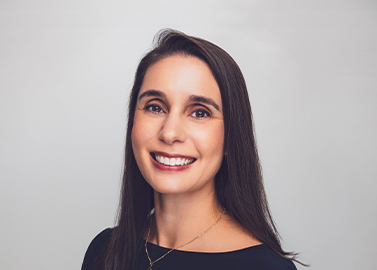
Erini R. Svokos
Partner